Orrery
A fictional app to explore the solar system, designed for the book format of the iPhone Duo: the sky in 3D on one page, the story on the other.
Overview
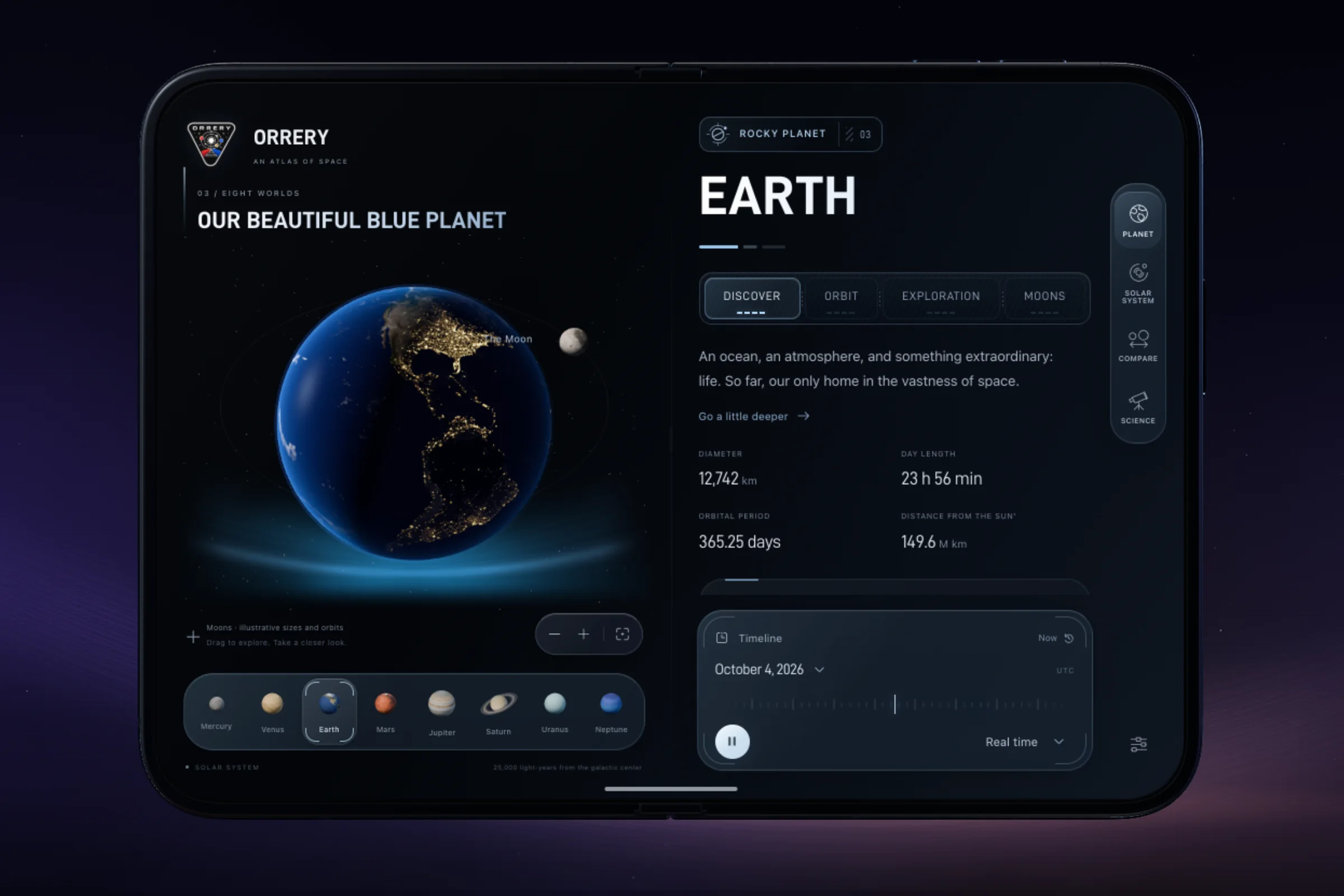
Orrery is a fictional atlas of space: eight worlds, their moons and their history, prototyped for a foldable iPhone.
An educational app where the subject is the interface: you turn the planets, change the date, ask a question and get a visual back. Made with GPT6 Astra, on the same 3D process as RIPS, my pack-opening app concept.
Explore the live prototype, closed, half-open or open. Same 3D process as RIPS; iPhone Duo 3D model by KinoViz.
Imagined, designed and prototyped the whole concept
App UI, 3D solar system, foldable layouts and a live prototype
Learning as a media: the subject becomes the interface
The problem
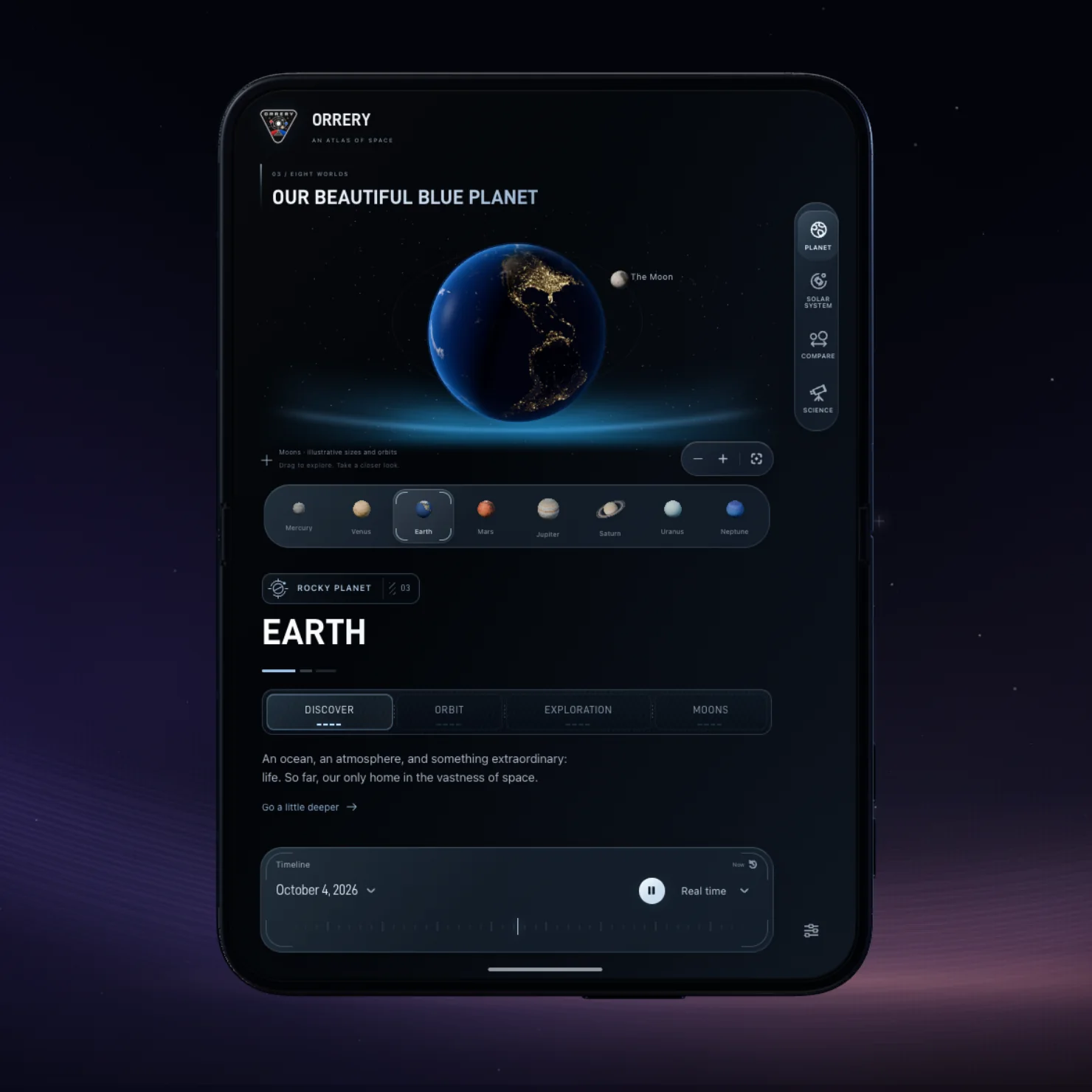
The biggest challenge: make the most of the iPhone Duo's book format, and keep the app at home in every posture of the fold.
Research & approach
The same loop as RIPS. The solar system is modelled in Blender and loaded live as glTF; the prototype is built in React and Three.js with GPT6 Astra, on a simulated iPhone Duo that folds, opens and turns; and the design is refined between rounds.
- 3D in BlenderThe planets and their moons in one Blender scene, loaded live in the prototype.
- A simulated DuoThe device folds from 0 to 180°, turns and goes to StandBy, so every layout is tested in its real posture.
- Grounded in sciencePositions from NASA/JPL orbital elements, planet data from NASA, textures under CC BY 4.0.
Flow
Design decisions
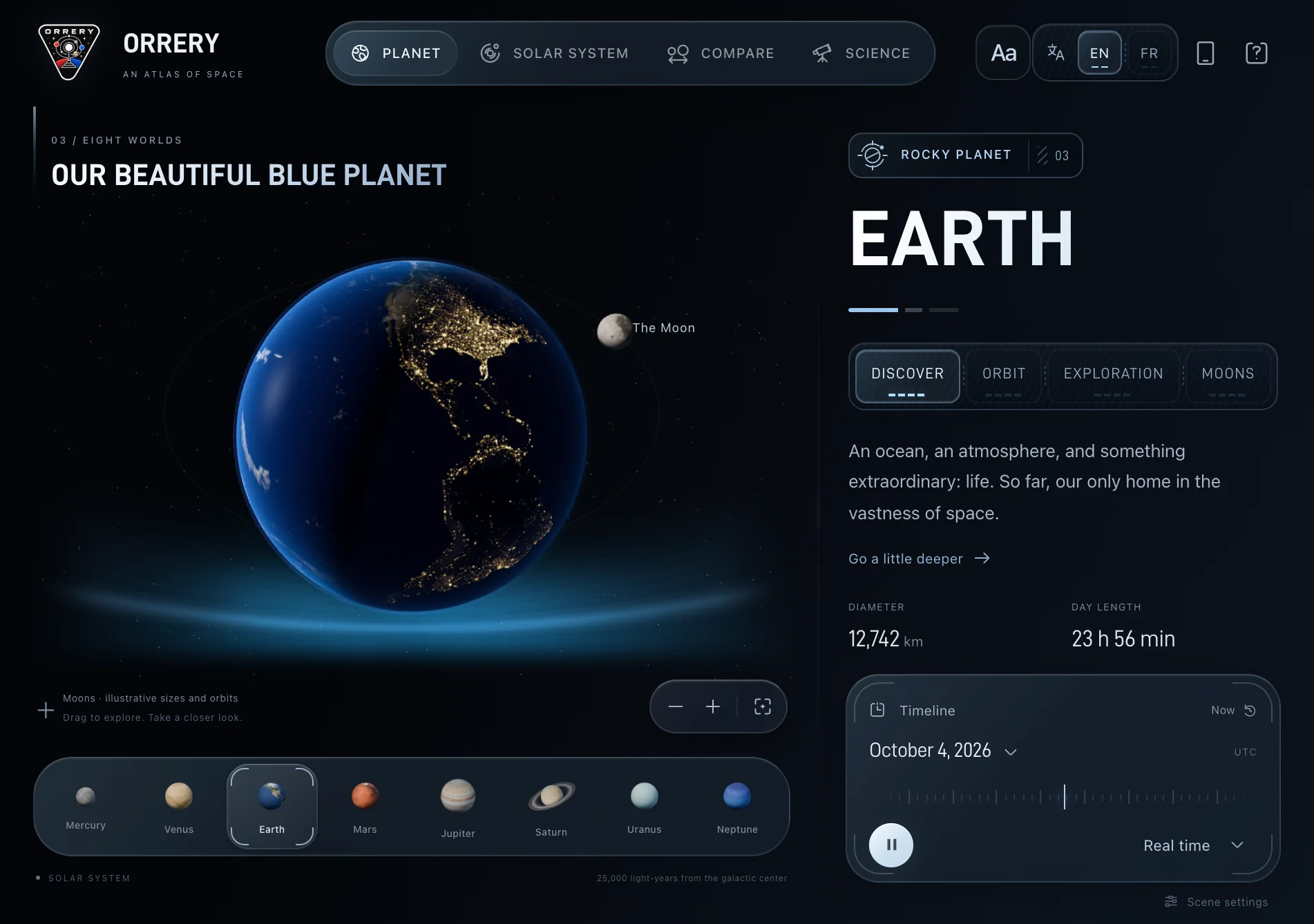
One page to look, one page to read.
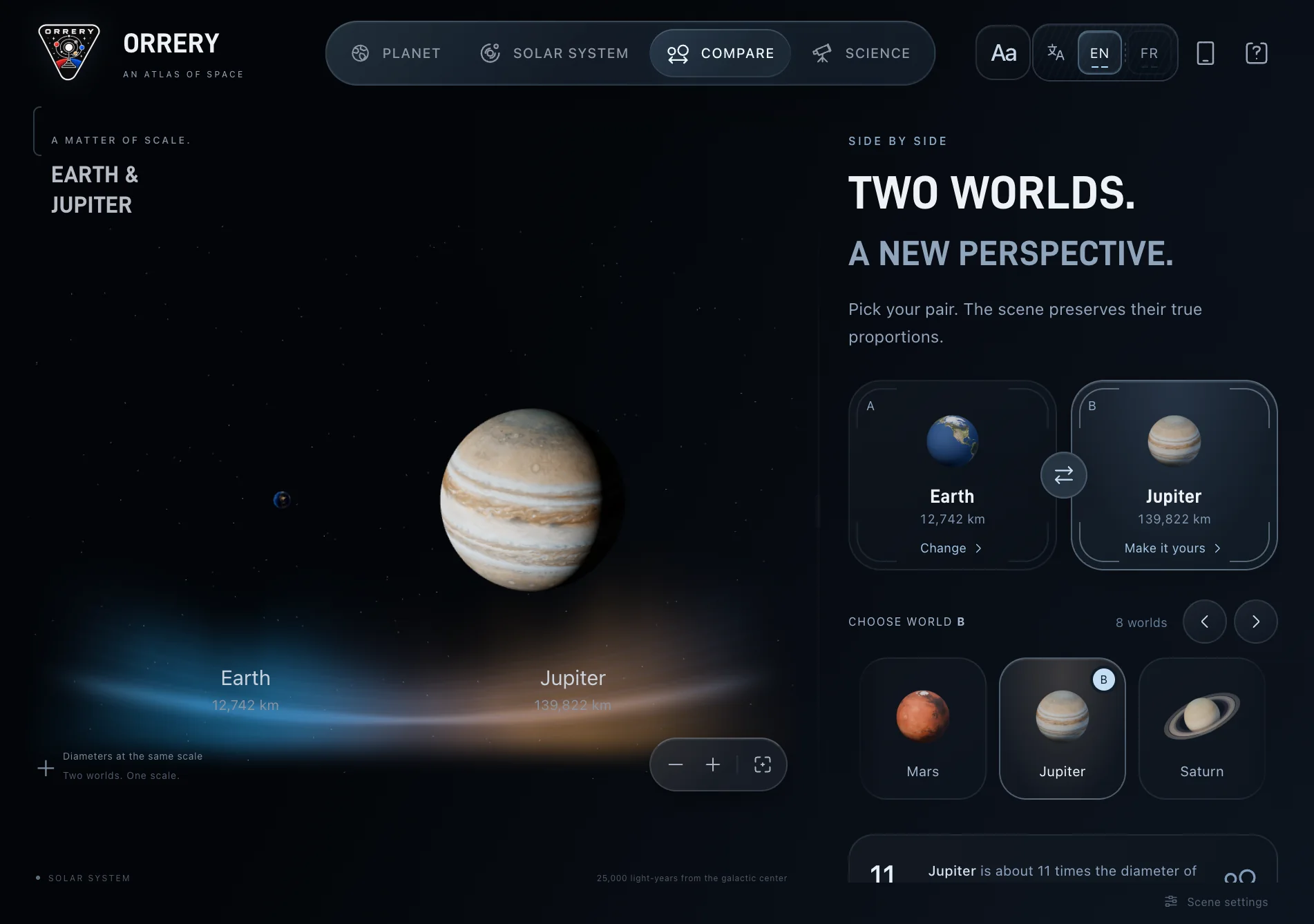
Open, the Duo becomes a spread: the world in 3D on the left page, under your finger, and its story on the right, with the facts, the tabs and the timeline. Nothing fights for the same space.
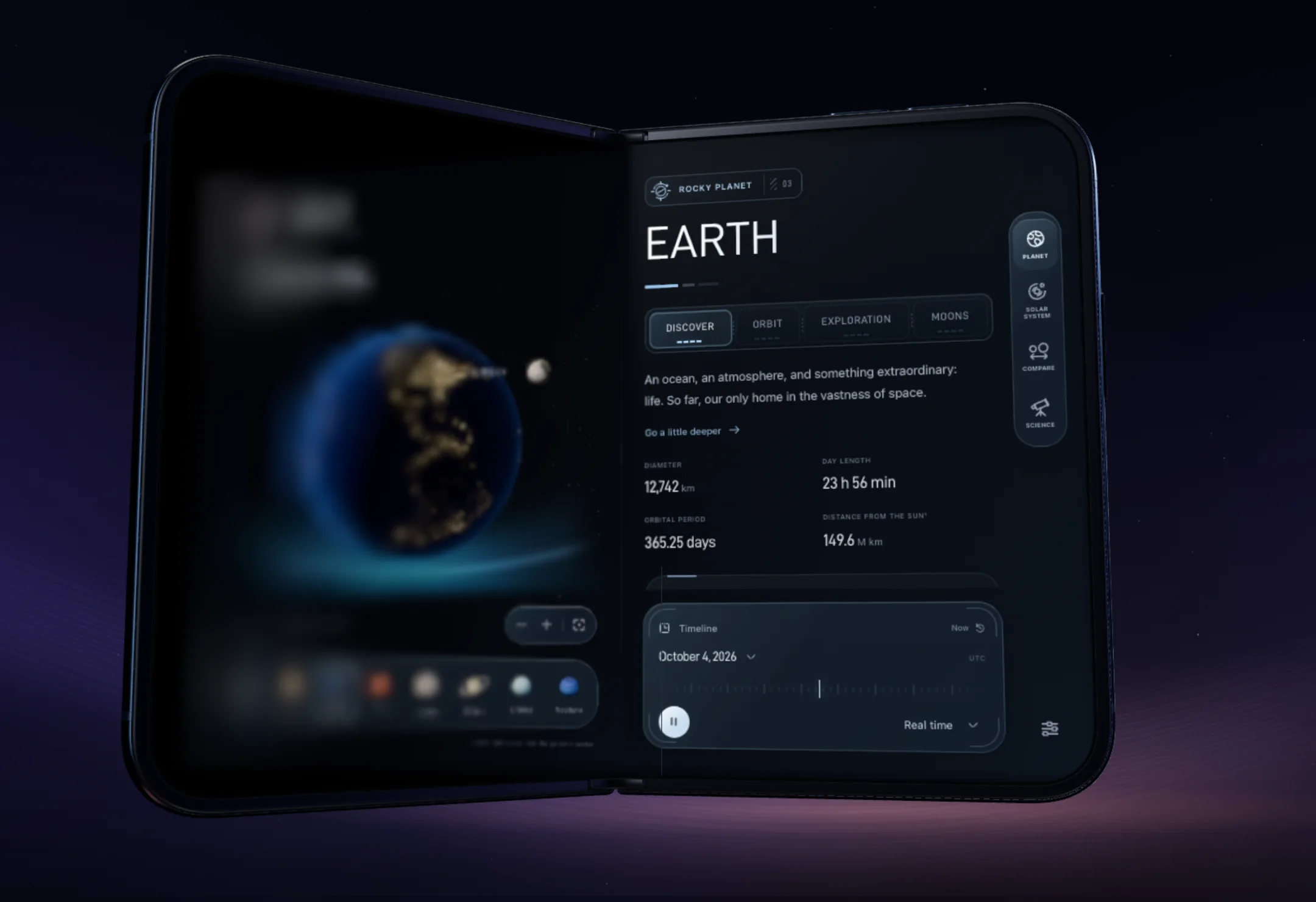
Every posture has its layout.
Closed, the cover display holds a single column. Half-open, the book stands. Open, the full spread. Laid on its side, StandBy turns the atlas into a night clock.
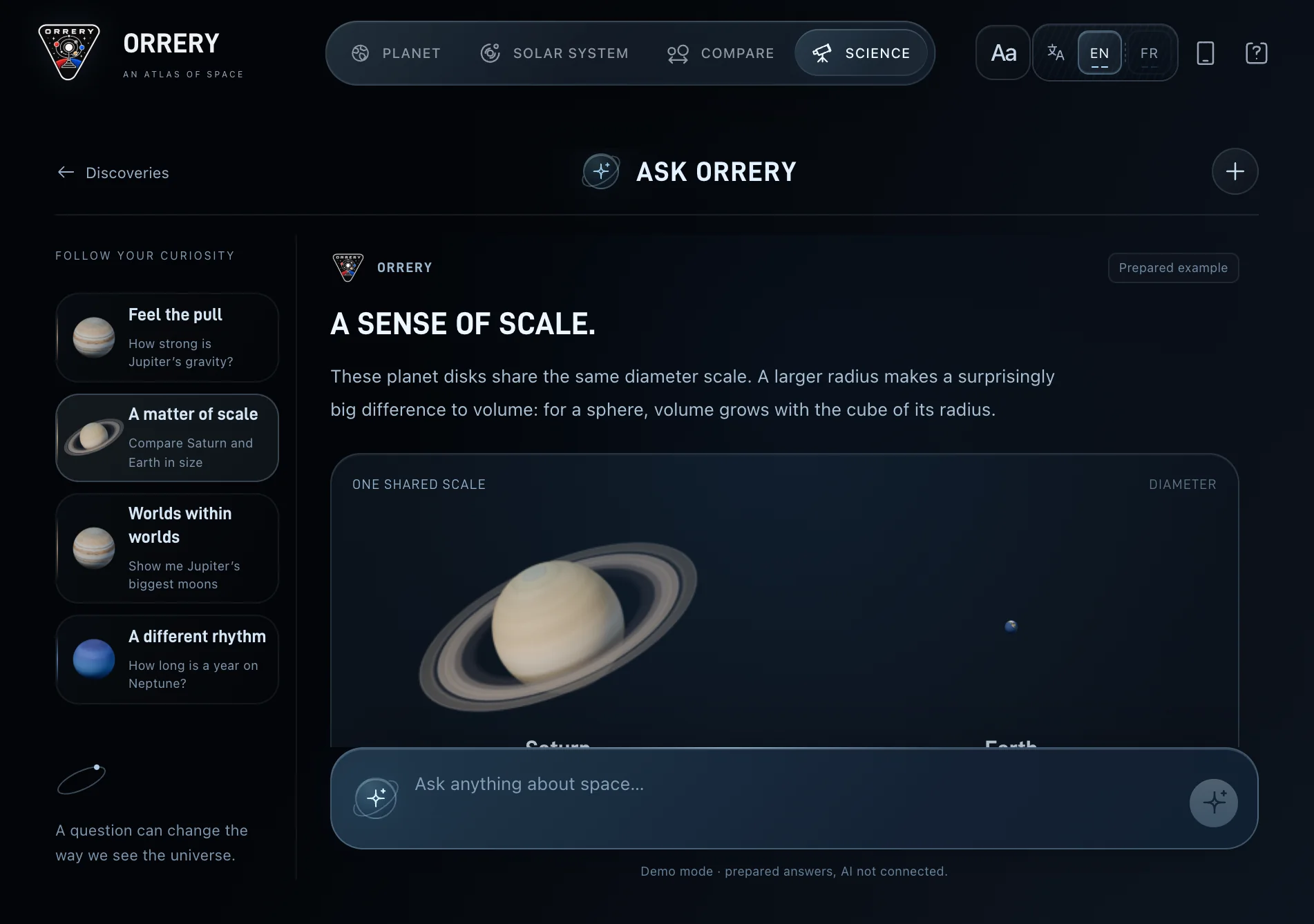
Ask, then see.
Ask Orrery answers with a visual you can play with, here Saturn and Earth on one shared scale, rather than with a paragraph. In the demo, the answers are prepared and the AI is not connected yet.
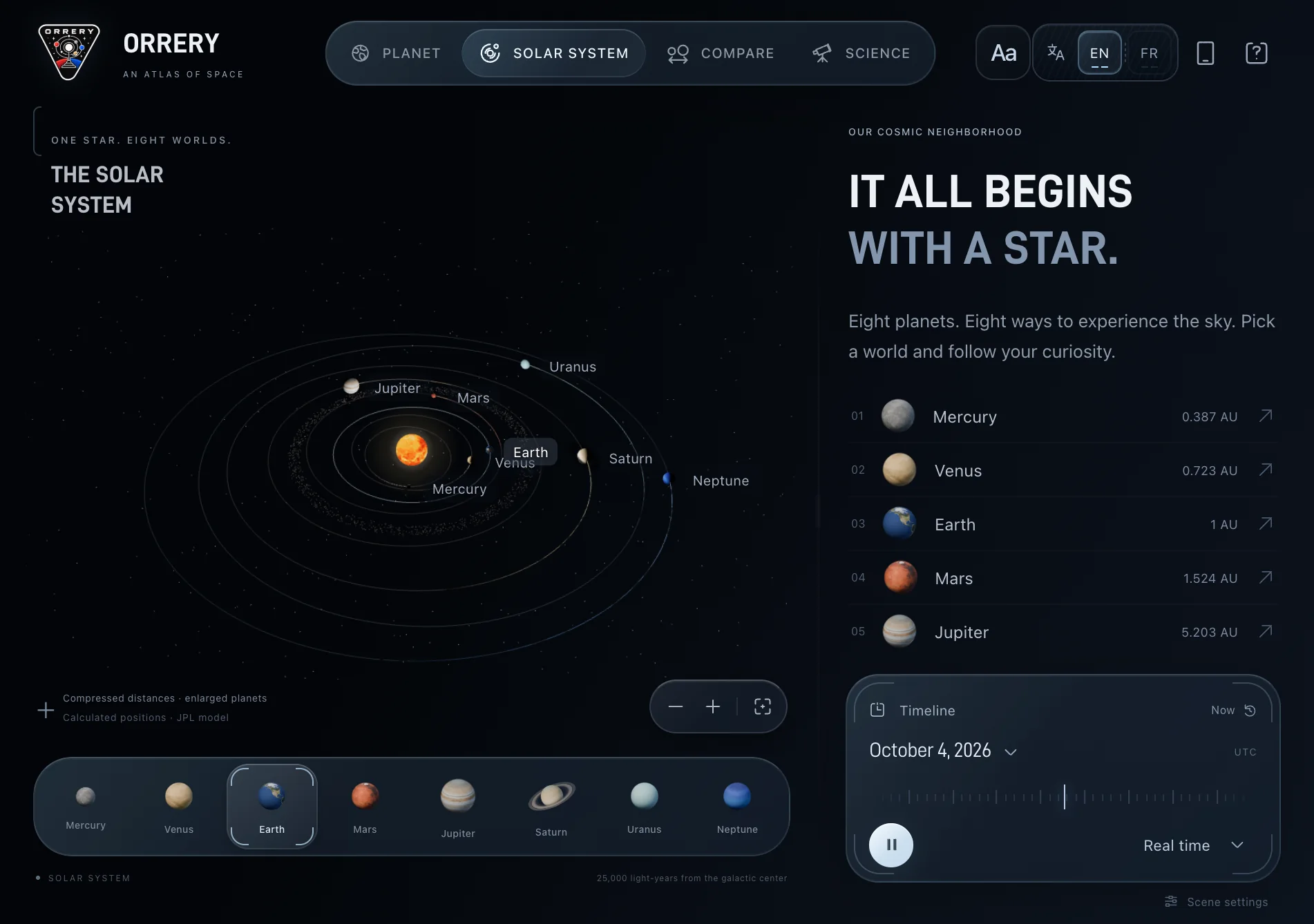
Real positions, readable distances.
Planet positions are calculated from JPL Keplerian elements for any date between 1800 and 2050. The solar system view enlarges the planets and compresses the distances, while keeping their angles and eccentricity.
The screens
The whole atlas, in the prototype.
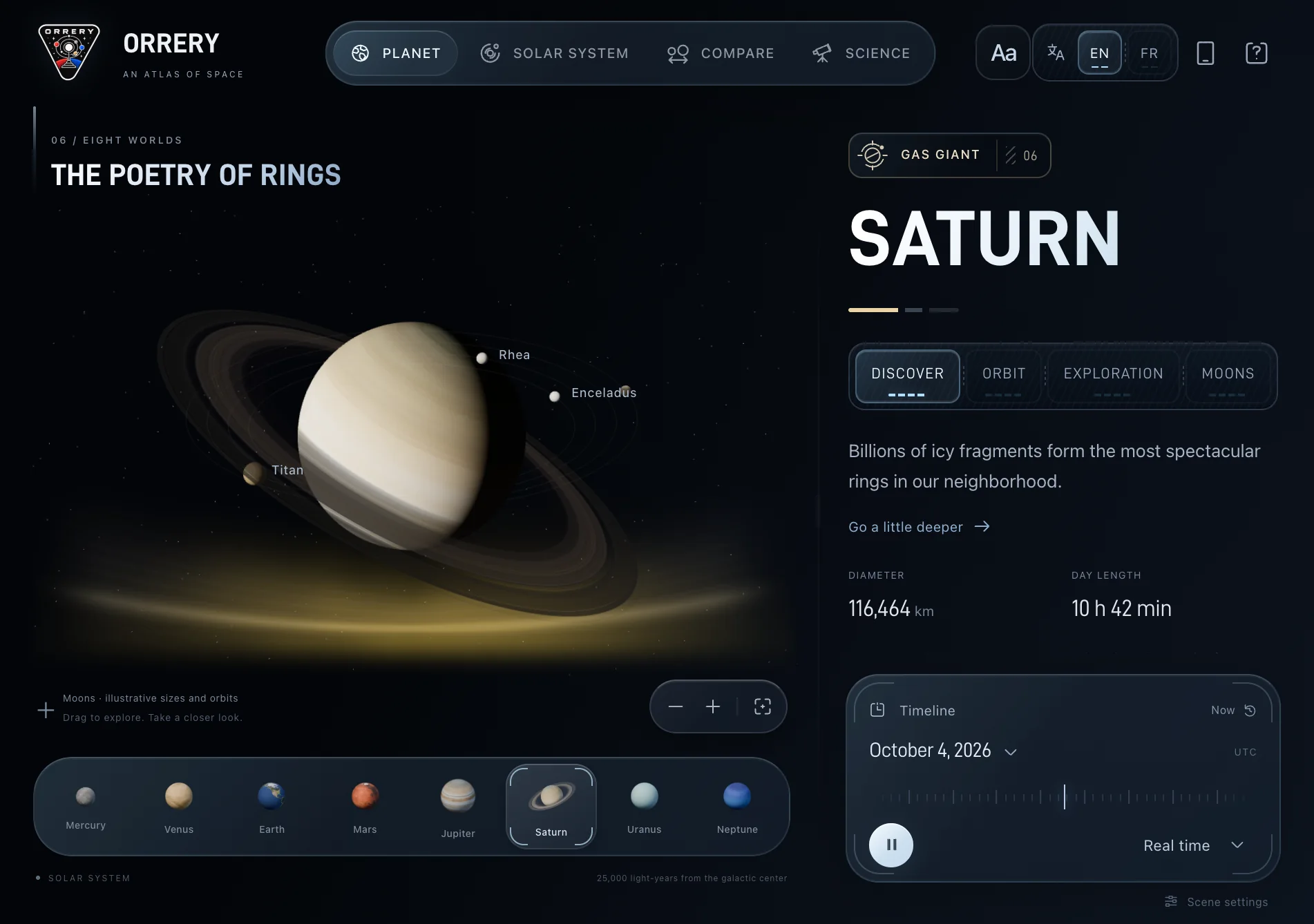
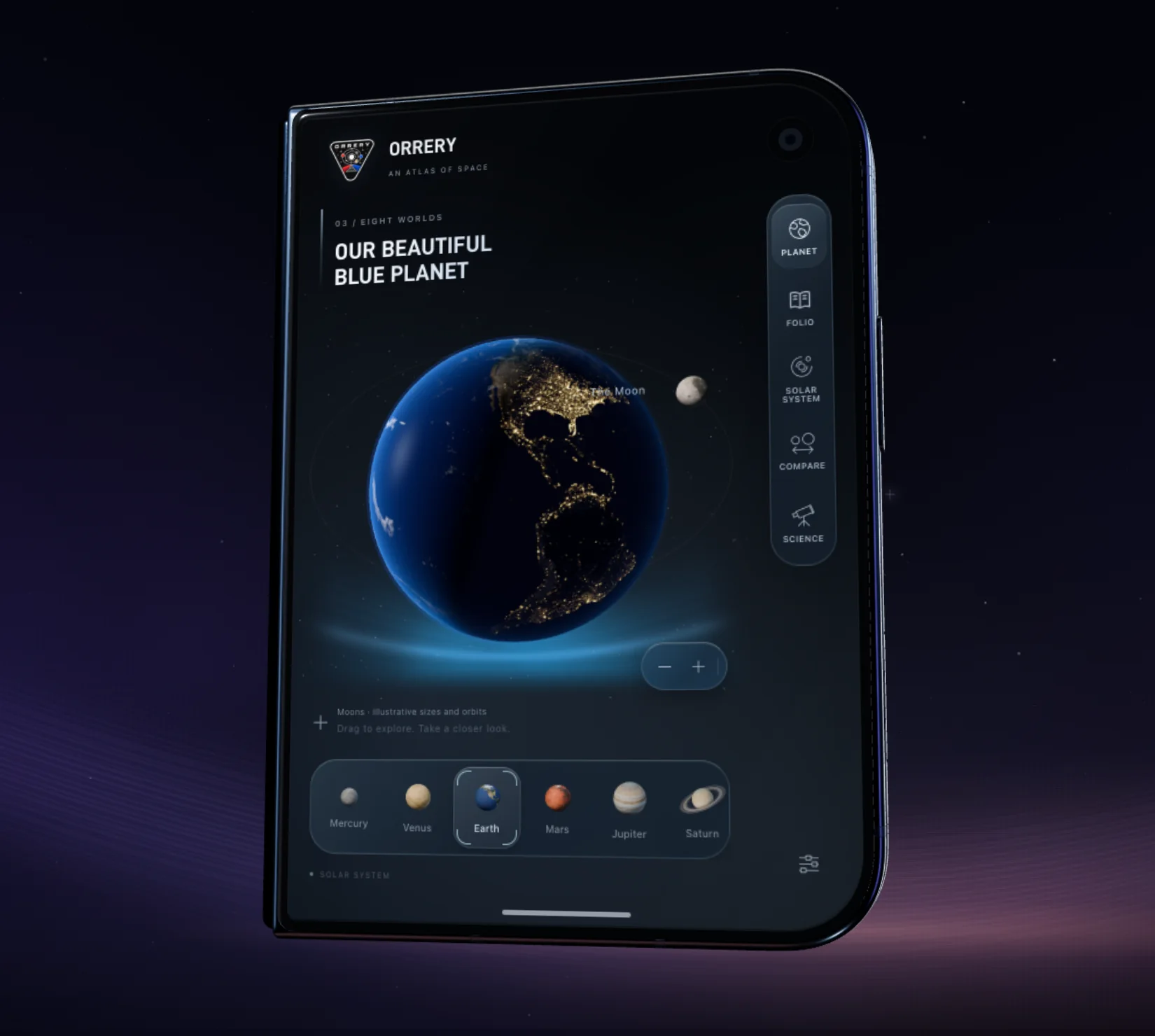
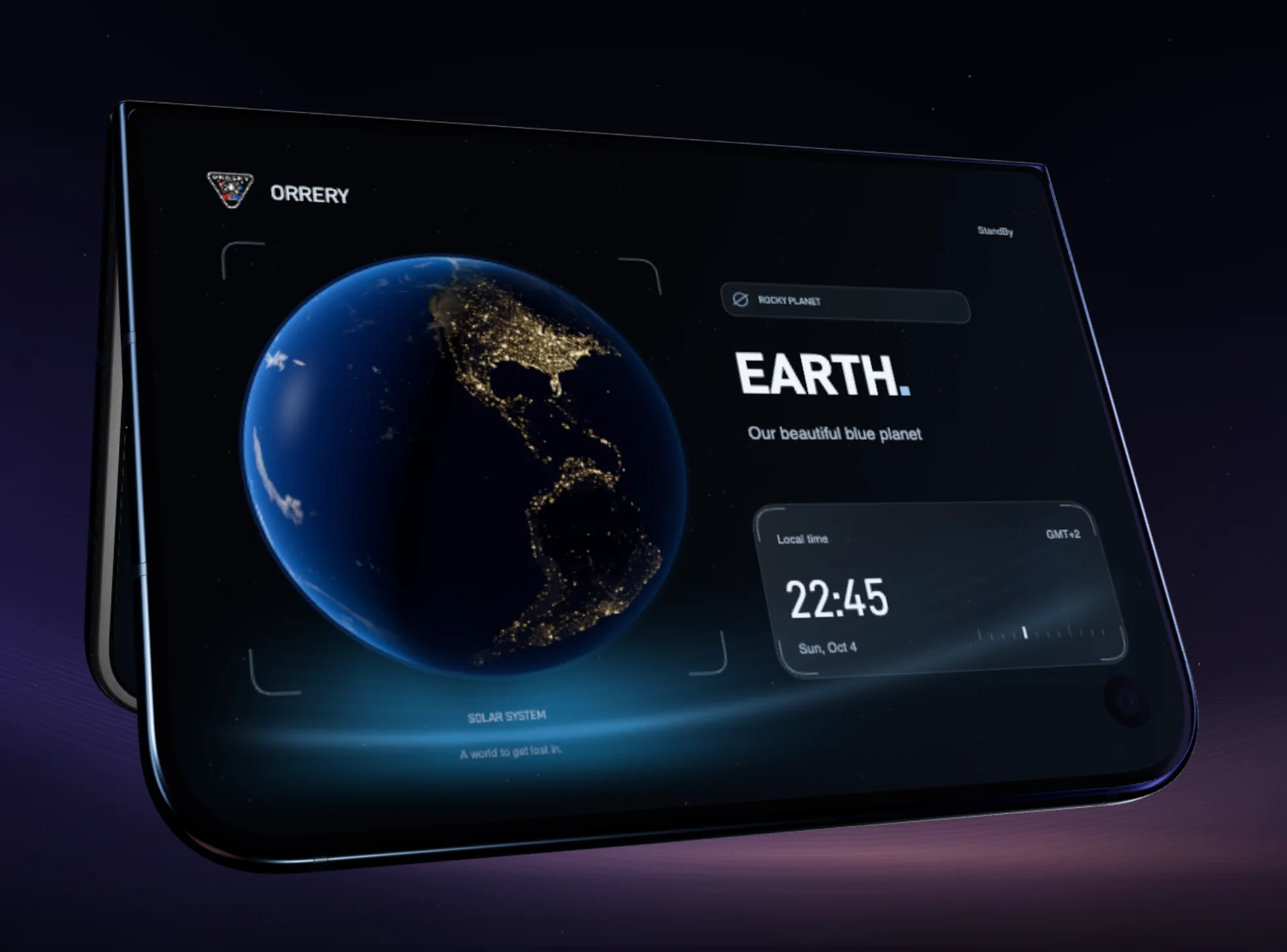
A world and its rings, the cover display, StandBy, and two worlds side by side, captured in the live prototype
Outcomes
A learning app that reads like a book and pulls you in like a film.
The book format, at last used as a book.